

The SSH-council is committed to improving the position of the SSH (social sciences and humanities, law, and economics & business administration) in science policy and research and innovation programmes in the Netherlands. Recently, we have also been focusing more on the European Union (EU), particularly the European Framework Programme (FP) for research and innovation (now Horizon Europe). The reason for this is that the role and contributions of the SSH to complex societal challenges often remain unrecognized.
Commitment based on two principles
The SSH-council’s commitment is based on two principles: (1) issues with a strong societal character (mental health, social resilience, polarisation, growing inequality) must be given a prominent place in the FP and (2) Within the technological policy frameworks, broad interdisciplinarity must be applied, because only with SSH-expertise will new technological innovations be able to take root in society. Based on these principles, the SSH-council regularly positions itself in discussions about the FP.
In Brussels, there is a lot of attention for strengthening the EU’s competitiveness vis-à-vis the United States (US) and China. Instead of adopting the American or Chinese model, the EU will have to distinguish itself. The societies and economies of the US and China are based on different norms and values, with different laws and regulations, institutions, histories, goals and priorities, economic activity and business climates.
We are convinced that the contributions of the SSH-domain in particular can make a difference in the way the EU competes, for example in shaping European earning capacity, shaping transitions (climate, digital, energy) in a fair and inclusive manner, determining standards and values, safeguarding rights and freedoms on the basis of the democratic rule of law, etc. This page provides an overview of the SSH-council’s activities towards the EU, the results achieved and its ambitions.

What does the SSH-council do towards the EU and what results has it achieved?
In 2024, the SSH-council started a process to determine its own position towards the next Framework Programme (FP10) and to build a lobby for better integration and positioning of SSH in the FP. This process involved seeking alignment and cooperation with European (SSH) bodies, such as the European Alliance of SSH (EASSH), the League of European Research Universities (LERU) and the Guild.
At the request of the Ministry of Education, Culture and Science (OCW), the SSH-council subsequently shared its position as input for the Dutch government’s commitment to FP10. The cabinet’s commitment reflects common positions, such as the aim to embed SSH broadly in the framework programme due to its crucial contribution to knowledge development and innovation, the safeguarding of a strong and independent European Research Council, and the importance of investing in research infrastructures in all research domains.
There was also an exchange with the expert group that carried out the interim evaluation of Horizon Europe (FP9), and we shared our position statement with them as input for the evaluation. Their report offers starting points and direct recommendations for FP10. The expert group’s final report includes the recommendation to address societal challenges more effectively by creating a ‘Societal Challenges Council’. Through this advice, the report gives SSH research and innovation a prominent place in the FP.
European Partnership ‘Social Transformations and Resilience’
The SSH-council also provided input on the Dutch position on the European Partnership ‘Social Transformations and Resilience’. Based on various considerations, our message was that the Netherlands should participate in this partnership. The partnership is broadly formulated, has a specific SSH-theme and is at the intersection of all four sectors of the SSH-domain. As such, the partnership offers a unique opportunity to valorise current SSH-expertise on the one hand and to build on the existing SSH-knowledge field and consolidate the Netherlands’ leading position on the other.
Large parts of the SSH-domain in our country are among the global scientific elite, making our country an ideal candidate to participate in this partnership. This partnership would give the Netherlands a leading position in Europe when it comes to future-proofing social security systems, a resilient constitutional state and institutions, labour systems, migration issues, education and training, climate, and achieving fair and just transitions in the areas of digitisation and sustainability. We were delighted to hear that the Ministry of Education, Culture and Science, together with the Dutch Research Council (NWO), has made €10 million available for the entire duration of the partnership.
Input for the Ministry of Education, Culture and Science
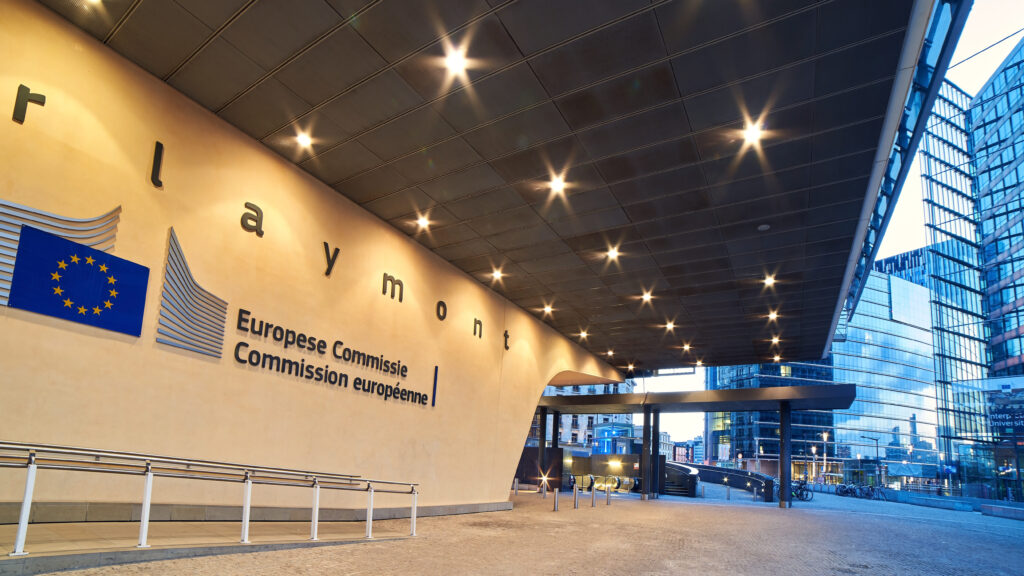
Most recently, we shared our views on the European Commission’s (hereinafter ‘Commission’) proposal for FP10 with OCW as input for the negotiations between the Member States and the Commission. In summary, the points that the SSH-council wishes to bring to the negotiations through this document are as follows:
- a specific budget dedicated to SSH-research, i.e. pillar 2 ‘Society’ = SSH;
- better interdisciplinarity and SSH-integration (particularly within pillar 2 ‘Competitiveness’);
- a stronger position for fundamental research (particularly within pillar 1), e.g. through clearer autonomy for the European Research Council (ERC) and the Marie Skłodowska-Curie Actions (MSCA);
- a larger budget for the ERC;
- and protecting the curiosity-driven nature of fundamental research programmes;
protecting applied research from political interference by the Commission, so that research within pillar 2 does not become ‘dual-use by default’ and the principles of the framework programme remain knowledge and innovation development.
Discussions will be held with the Ministry of Education, Culture and Science and European partners in the coming period to highlight these points in the FP10 negotiation process. If approved by the European Parliament and the Council of the EU, the proposal offers opportunities for SSH research under pillar 1 ‘Excellent Science’ and pillar 2 ‘Competitiveness and Society’. However, much still depends on the further elaboration and concretisation of the various elements of the proposal. In addition, the focus on ‘Excellent Science’, i.e. fundamental research, and on ‘Society’ through demand-driven research is positive in any case.
EASSH membership
The SSH-council has been working with the EASSH since 2024 and is now also a member. So far, this collaboration has led to published joint statements and the use of each other’s networks in lobbying for better integration and positioning of SSH in the FP. We aim to expand our network in Brussels and the EU in the coming years and to actively continue the lobbying we started in 2024.
What are the SSH-council’s ambitions with regard to the EU?
Ideally, SSH will be given a prominent place in the EU’s knowledge and innovation policy, in FP10 and future Framework Programmes. This will create opportunities for SSH researchers. We hope to show policymakers, politicians, civil servants and administrators, both nationally and in the EU, that SSH is indispensable in tackling societal challenges, in innovation processes, and in ensuring the future-proofing and competitiveness of the Netherlands and the EU.