
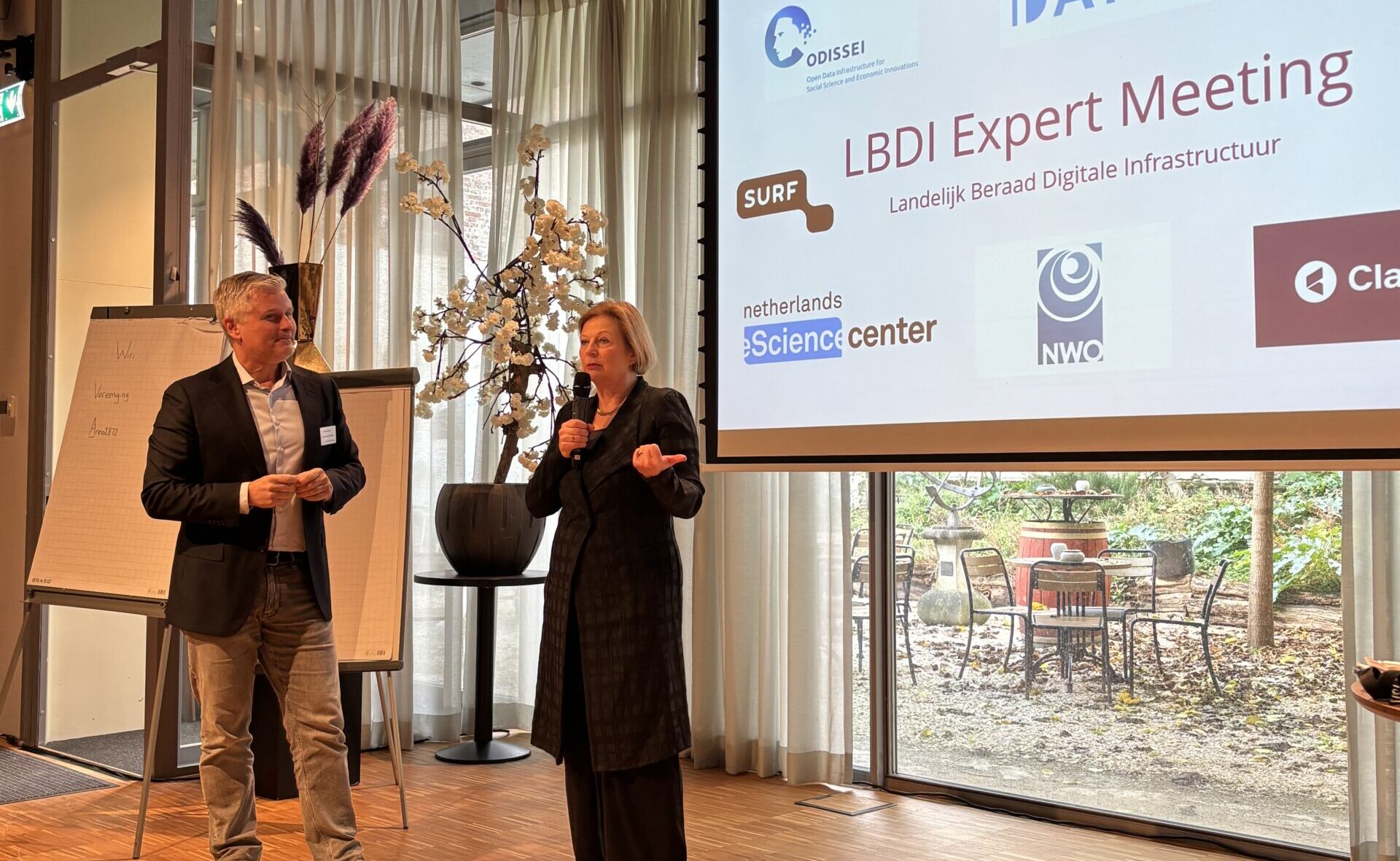
On 18 November 2025, the National Digital Infrastructure Council SSH (LBDI-SSH) organised an expert meeting that focused on one central question: what should the future research agenda for digital infrastructure in the SSH domain look like and what do researchers need to achieve this?
The LBDI-SSH fulfils a connecting, coordinating and advisory role in the field of digital infrastructure within the SSH Council. The partnership, consisting of organisations such as CLARIAH, ODISSEI, DANS, SURF and eScience, is working on a coordinated and future-oriented expansion of facilities for digital research in the Netherlands. The expert meeting was intended to engage in dialogue with specialists in the field, so that the LBDI-SSH’s research agenda is based on the needs of researchers.
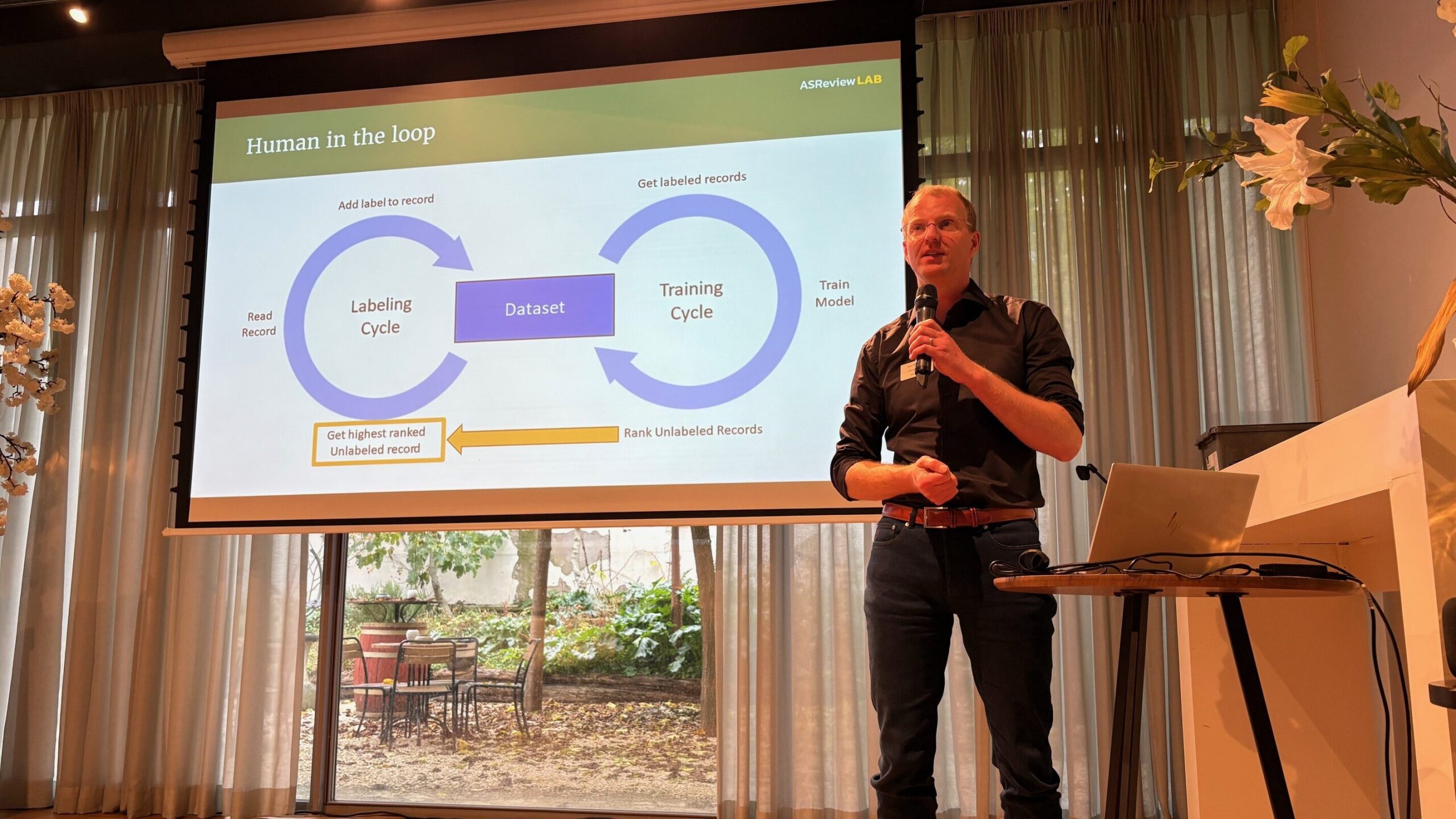
Three keynote speeches provided the starting point for the discussion. Dirk van Miert, Jessica Piotrowski and Rens van de Schoot shared their experiences with digital infrastructures in various domains and outlined the current opportunities, needs and technical or organisational bottlenecks.
In four themed sessions, the experts, researchers, data and ICT specialists, and research support professionals in attendance discussed the most important developments that should help shape the agenda in the coming years.
Chatbots as research tools
Participants distinguished between the research process and the research content. Chatbots are already being used effectively for process support, such as coding, brainstorming, or database interaction. However, there is caution regarding the use of chatbots for content analysis. Reliability, transparency and data quality remain major issues. The need for guidelines and collaboration between computer scientists, social scientists and humanities scholars was strongly emphasised. One idea that was put forward was an umbrella chatbot that helps researchers find the most suitable and reliable tools.
Handling new sorts of data
New and changing data formats pose complex challenges. This session introduced the term “recreatability”, an approach in which research processes remain essentially reproducible, even when the underlying data changes over time. Participants identified bottlenecks around linking, storing and distinguishing heterogeneous datasets. Dealing with AI-generated data also requires new assessment criteria and adapted workflows.
AI in SSH
The discussion focused primarily on sustainability and scalability. The environmental impact of AI models appears to be a growing concern. Participants indicated a need for guidelines on using the smallest possible models and for tools to determine when AI is useful. Team science was mentioned as a promising approach for dealing with the increasing information load and complexity.
Public values
Many principles relating to public values, such as FAIR principles, are already widely applied, but implementation appears to be highly fragmented. The need for more centralised services, storage solutions and the sharing of legal expertise on data access was clearly highlighted. Transparency about cost considerations between centralised and decentralised storage was also considered important. The session also advocated sharing positive examples to show what regulations such as the GDPR make possible.
With all the insights gathered, LBDI-SSH will now continue to refine the research agenda for digital infrastructure, in close collaboration with infrastructure organisations, universities and research institutes.
Recommendations or questions? Please contact the secretary of LBDI-SSH via LBDI-SSH@uu.nl